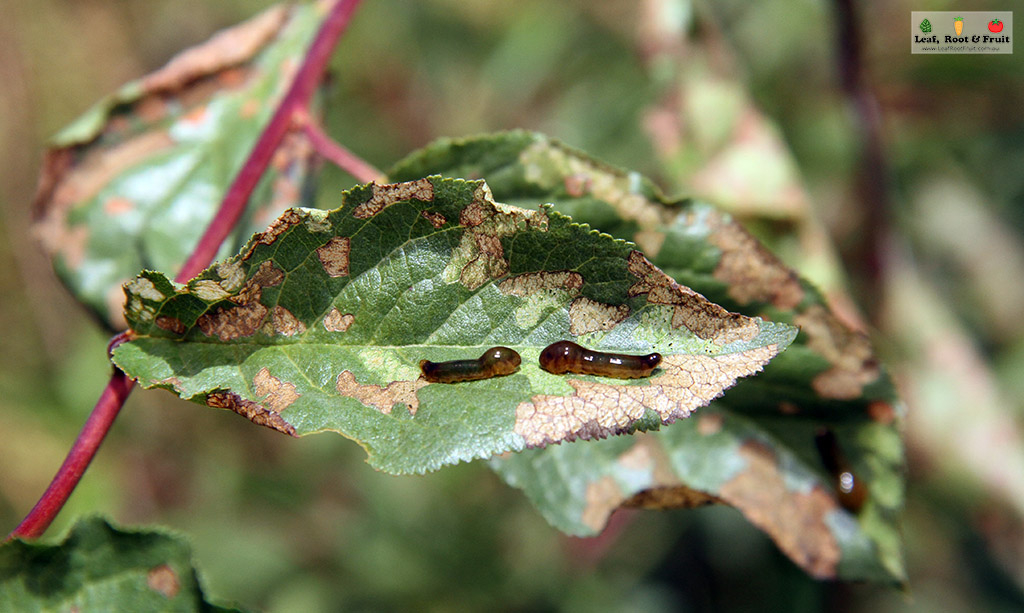
Black sawfly (Caliroa cerasi) larvae can cause significant damage to pear, cherry, quince, nashi and plum trees.
If you are a pear grower, then this slimy little critter is known as a cherry slug. If you are a cherry grower, then you’d call it a pear slug.
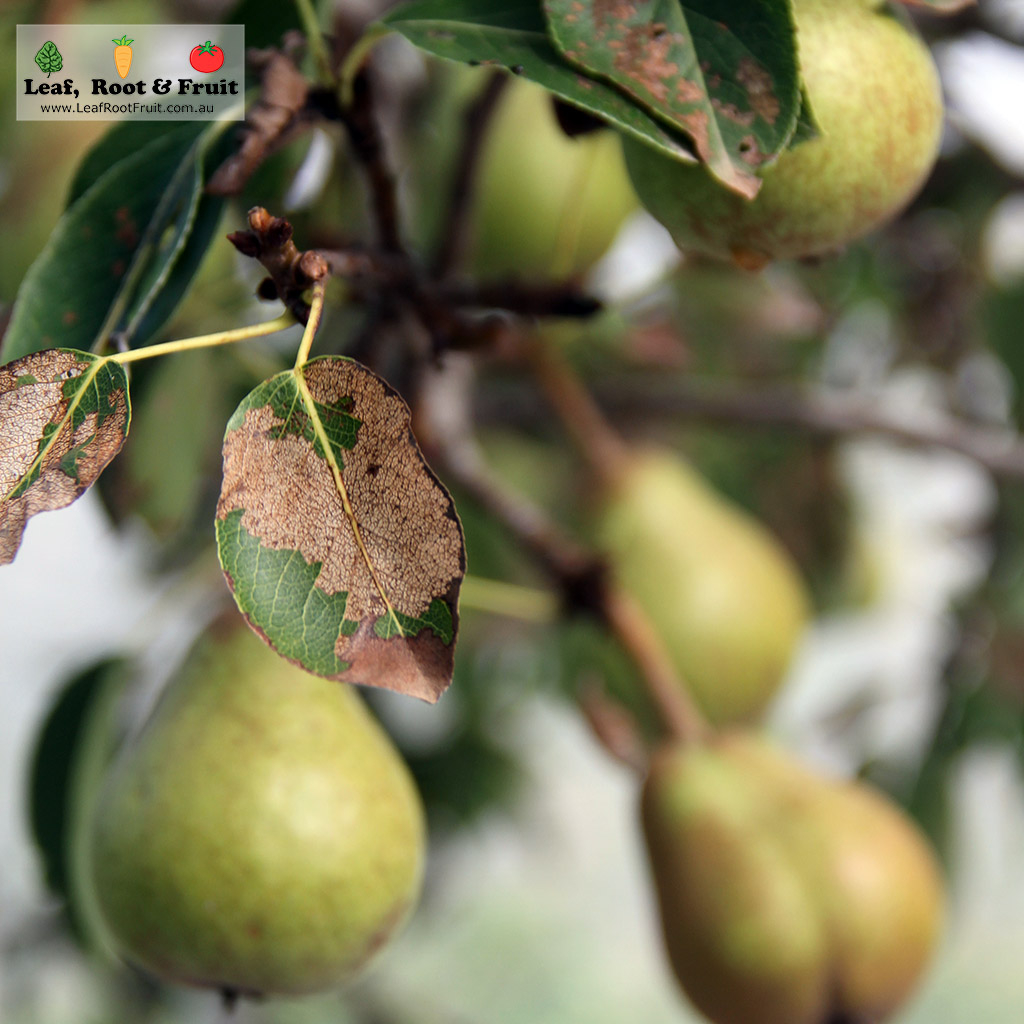
They make my tree look an ugly mess
I get asked about managing this orchard pest all the time, mainly because it does make the trees look so incredibly unsightly. Gardeners can’t help but notice them and want to do something.
However, I always volley another question in return.
“Is the tree very productive?”
To which I receive one of two answers.
“Oh yes, the tree is covered in fruit every year,” or less likely, “The tree is only young and hasn’t started producing yet.”
I’ve never really had anyone say “No, the tree isn’t productive at all.” Cherry slugs seem to infest productive trees, and less so, unproductive trees.
Yes, they make the trees look ugly. But Cherry slug doesn't seem to impact productivity.
So then I need to ask if the slugs are really a problem after all. Isn’t the primary aim of the fruit tree to produce fruit? If it’s doing that in spite of the cherry slug, then is there really a problem?
I would argue there isn’t a problem at all and they may even be beneficial to your tree management regime.
Just another seasonal pest?
Cherry (or pear) slug seem to proliferate in autumn, often after the affected stone or pome fruit have already been picked. At this point, most fruit trees will put on lush growth of new foliage. The autumn break stimulates an abundance of growth. There’s no fruit to divert energy to, so the tree grows leaves instead. It is probably this tender new growth that attracts the sawfly to lay its eggs there in the first place.
I’d argue that all the leaf chewing by the cherry slug at the end of the season reduces the growth of the tree, and this is a good thing. That is, the slugs reduce your pruning requirements and help to keep the tree small (other ways to deliberately keep a fruit tree small are covered here).
Thanks cherry slug!
I don’t care. I don’t like them. How do I control them?
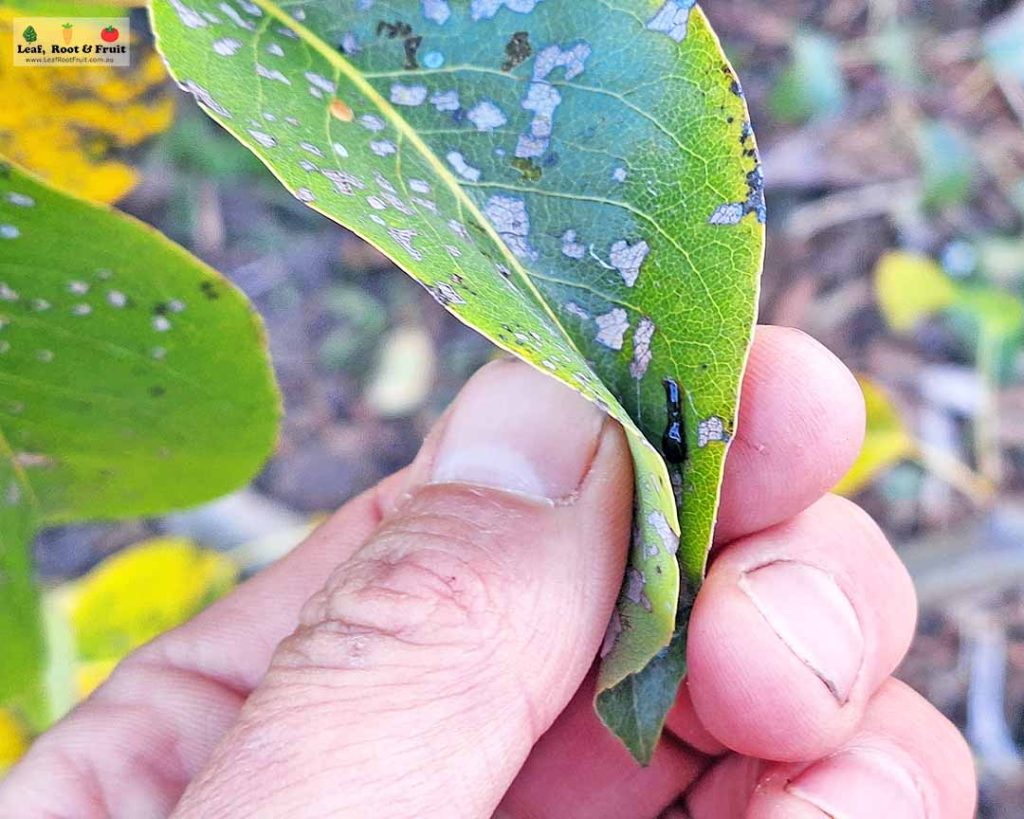
If you have only a small tree, then the best way to deal with them is to squish them (yes I know, it’s gross!).
No slimy fingers with this method. You can make squishing cherry slugs less gross by folding the leaf over and squishing the slugs between the layers.
If you have larger trees then consider dusting them with a powdery substance that desiccates the slugs. Wood ash or a fine builder’s lime are good choices.
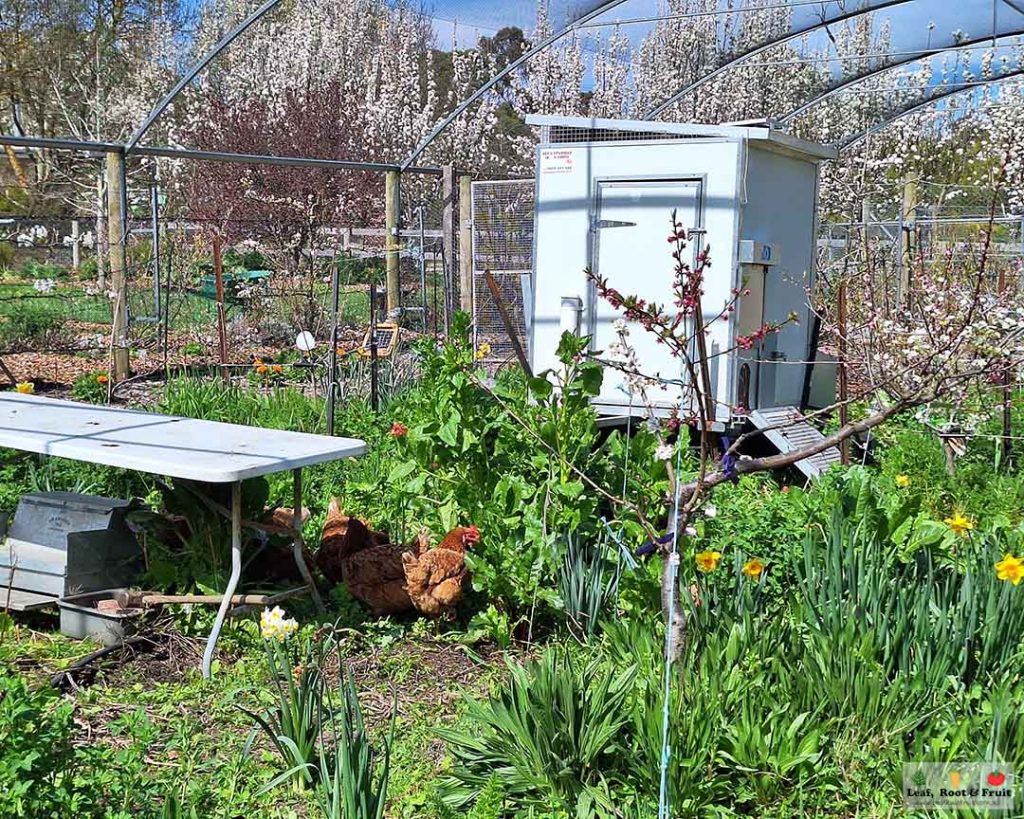
Letting chickens have a scratch under the trees in winter can help to reduce the number of larvae that are overwintering in the soil.
Read more about integrating chickens into your backyard orchard here.
Organic crop protectants product ‘ECO-OIL’ works for me. The slugs can’t cope with anything oily as well as the more common use of powders which are hard to apply under leaves. This year I’m going to try a mix of cooking oil, detergent(tiny bit) and water.
Thanks for the tip. As you know, I love a garden experiment, so I’ll be keen to hear how you get on with the cooking oil/detergent mix. It sounds a bit like white oil?
Pear slug has always ben rampant in my cherry and pear trees and now in my Japanese plums.
Despite my rigorous squishing (I would be away every second week and the slugs would take full advantage of this) and the best efforts of the parasitic wasps my trees would be almost defoliated by seasons end.
Not good for fruit quality or tree health.
I finally and reluctantly decided to try a product containing Spinetoram in spring 2025.
As it is highly toxic to pollinators (and fish), I carefully sprayed after fruit had set on the season’s first generation of slug.
It worked like a charm and only the occasional and squishable slug for the rest of the season.
The red meat ants that would farm (and fiercely defend) blackaphids and suck sugary goodness from fruit and tip growth didn’t like it and stayed away too.
It made tending the trees a lot easier.
Will I use it next season?
Only if slug numbers look like getting out of control, but hopefully this year’s knockdown will mean reduced numbers for a while.
I will probably try painting the product on the trunks to see if that will be enough to keep the ants at bay. My various ants are a pain on most of the fruit trees. They should stick to their native diet! 😀
Jenny
Daisy Hill Central Goldfields VIC

Organic crop protectants product ‘ECO-OIL’ works for me. The slugs can’t cope with anything oily as well as the more common use of powders which are hard to apply under leaves. This year I’m going to try a mix of cooking oil, detergent(tiny bit) and water.
Hi Margot,
Thanks for the tip. As you know, I love a garden experiment, so I’ll be keen to hear how you get on with the cooking oil/detergent mix. It sounds a bit like white oil?
Good luck with the slugs.
Duncan
Pear slug has always ben rampant in my cherry and pear trees and now in my Japanese plums.
Despite my rigorous squishing (I would be away every second week and the slugs would take full advantage of this) and the best efforts of the parasitic wasps my trees would be almost defoliated by seasons end.
Not good for fruit quality or tree health.
I finally and reluctantly decided to try a product containing Spinetoram in spring 2025.
As it is highly toxic to pollinators (and fish), I carefully sprayed after fruit had set on the season’s first generation of slug.
It worked like a charm and only the occasional and squishable slug for the rest of the season.
The red meat ants that would farm (and fiercely defend) blackaphids and suck sugary goodness from fruit and tip growth didn’t like it and stayed away too.
It made tending the trees a lot easier.
Will I use it next season?
Only if slug numbers look like getting out of control, but hopefully this year’s knockdown will mean reduced numbers for a while.
I will probably try painting the product on the trunks to see if that will be enough to keep the ants at bay. My various ants are a pain on most of the fruit trees. They should stick to their native diet! 😀
Jenny
Daisy Hill Central Goldfields VIC
Hi Jenny,
Thanks for sharing your experience. I’m glad you found a solution to your problem.
Duncan
mine are here in June and are definiitely affecting the health of the tree and development of the fruit
Hi Rebecca,
That’s very interesting. It’s been a bizarre winter. Good luck wit managing your outbreak.
Duncan