Skip to content
Back Home

Supporting you to grow food

Supporting you to grow food

  • About
  • Substack
  • Consult
  • Foodscaping
    • Permaculture Landscape Design
    • Edible Garden Landscaping (Foodscaping)
    • Edible Forest Gardens
    • Orchard Netted Structures
  • Education & Events
    • Upcoming Events
    • Private Garden Tours for Groups and Individuals
    • Workshops For Councils and Community Groups
    • Fruit Tree Pruning Masterclass
    • Vegetable Patch From Scratch
  • Blog
  • Contact

IMG_9097


← Previous Next →
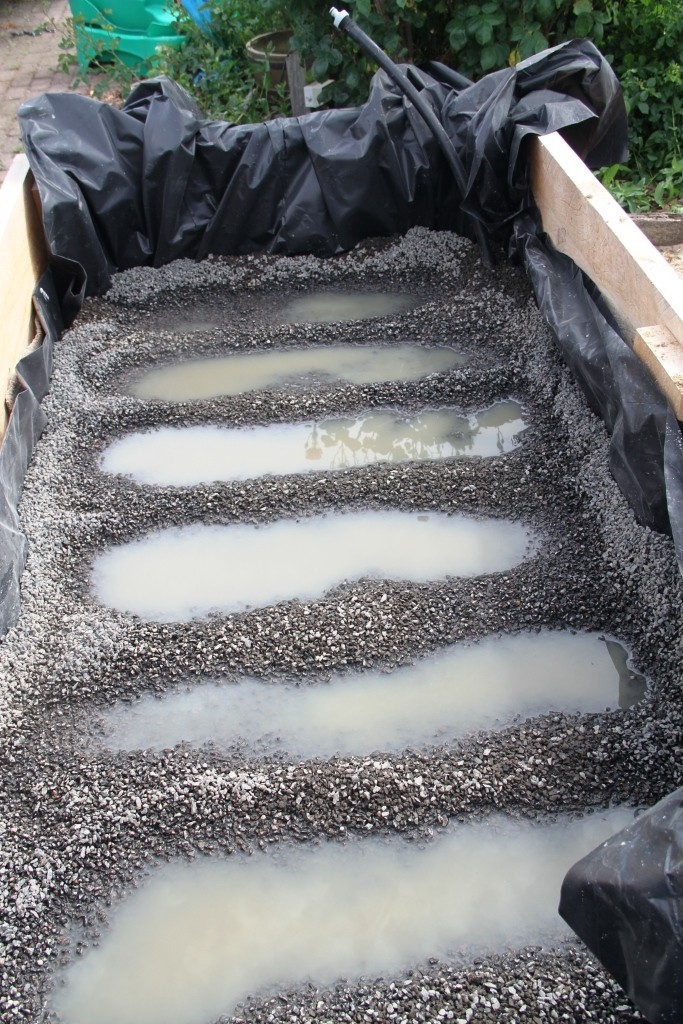
Intall Wicking Beds in Melbourne

Our raised cypress garden beds make for perfect wicking beds .

Our Recent Facebook Posts

Our Recent Facebook Posts
Leaf, Root & Fruit

leafrootfruit

✅ What to plant in December ❓ At this time of ✅ What to plant in December

❓ At this time of the year, I often get asked whether it’s too late in the season to plant a vegetable or herb garden. Except for the middle of winter, you can start an edible garden at any time of the year. It's all about choosing the right plants. Most of the spring planting options are still applicable. In December, you'll just have to be careful to keep the young plants well watered during periods of hot weather. Your harvest will begin later than in earlier planted gardens but will continue long after the early gardens have been pulled up to make space for next winter's crops.

🌱Here's my guide to some of the things you could consider planting this month in a warm temperate climate, like Melbourne’s. My planting guide generally refers to vegetables planted in the garden (as opposed to a greenhouse). This planting may consist of seeds directly sown (my usual and preferred method) or plants transplanted as seedlings.

🥕 For more details about what to plant now, read my FREE garden update and planting guide:
➡ https://leafrootfruit.substack.com/p/december-2025-planting-guide-garden-update
🌸 My stone fruit trees have also blossomed well 🌸 My stone fruit trees have also blossomed well this spring. I was concerned that my apricots were going to have an “off year” after their bumper crop last summer. But I must have managed the fruit thinning perfectly, because the trees were once again covered in blossom.

But their magnificent display quickly faded. In the weeks that followed, most of the blossom dropped to the ground, victims of blossom rot. This fungal disease proliferates when conditions are humid at the time of blossoming. Apricots are extremely susceptible.

After the blossom fell, both my apricot trees continued to deteriorate. Gummosis set in, with sap oozing from the bark as the new foliage on affected branches withered. On my “Divinity” tree around half of the foliage has died back. The tree is looking sickly but still carrying a handful of fruit. The “Tilton” looks marginally healthier – it’s carrying a few handfuls of fruit and has far less dieback. But it’s still struggling. 

Just this week, I noticed that some of the immature fruit is going mouldy. I’ve now gone from the promise of bountiful blossom and dreaming about drying or bottling buckets of surplus apricots to crossing my fingers that the dreaded Queensland fruit fly will be slow to emerge and I’ll manage to salvage a few apricots to eat fresh.

At least it vindicates my decision to omit apricots from my post Ten Fruit Trees You Should Include in Your Backyard Orchard. One thing is for sure, Kyneton ain’t apricot country. Conditions are too humid in spring and the trees struggle in our climate. Good harvests are possible, but only when all the climatic hurdles are cleared – and for apricots there are a lot of those. 

❓How are your apricots looking this spring?

📖See my FREE November garden update for more happenings in my garden
➡https://open.substack.com/pub/leafrootfruit/p/november-2025-planting-guide-garden-update?r=2aoogj&utm_campaign=post&utm_medium=web
⏰🧄 Like everything in the garden this spring, ⏰🧄 Like everything in the garden this spring, the garlic scapes (flower stalks) have been slow to emerge. I love harvesting garlic scapes – they’re delicious. Removing them allows the plant to invest more energy into forming a large bulb. More on that here:
➡ https://leafrootfruit.substack.com/i/145745618/what-varieties-to-choose

❓ No scapes on your plants? There are two main types of garlic: softneck and hardneck. The “neck” refers to the stem that grows up through the centre of the bulb. Only hardneck varieties will produce scapes.

Softneck garlic is great because it stores longer. Hardneck garlic has large bulbs with huge cloves. It doesn’t store as well, but I prefer it for how easy it is to prepare for cooking, and it has better flavour.

If there are no scapes emerging from your garlic, you’re probably growing a softneck variety.
🏇 Giddy up, it’s the Melbourne Cup! 🍅 The 🏇 Giddy up, it’s the Melbourne Cup!

🍅 There’s so much different advice about when is the best time to plant tomatoes. Some folks say AFL Grand Final weekend is a fantastic early opportunity (the last weekend of September) and I agree that for Melbourne it’s an okay time to plant. Others advocate for patience and waiting another month or so for the soil to warm up (my Fool’s Garden experiment is a great example of why patience is a good strategy). Regardless, in southern Australia, the first week of November is usually a good time to get planting. Coincidently, many of us Victorians have a public holiday on the first Tuesday in November for the running of the Melbourne Cup, or as I like to think of it, a day off work to do some gardening.

❄ In my part of the world, the risk of a late frost is always lingering. Last week, we had frosts on two consecutive mornings. Given that most of my garden observations are aligning with what I observed in 2022, I reckon this year, the last frost is going to be late, very late. 

🐴 But I can’t sit around waiting for the perfect conditions to arrive. My growing season is very short. Normally Cup Day is time to get cracking, or I’ll be out of the running.
 
⏰ I followed my plan for sowing my tomato seeds this year. But despite my best efforts, they’re also suffering from the spring stutters. The plants don’t look as perky as they normally do at the start of November. Nor are they as big. There are a few flowers, but nowhere near the number of fruit that last year’s plants had set by Cup Day. Given the likelihood of lingering late frosts, I’ll hold off transplanting them for another week or two. 

❓ Could this year be the first in over a decade that I don’t get to harvest a Christmas tomato? There’s a good chance. How are yours looking?
✅ Here's a guide to some of the things you could ✅ Here's a guide to some of the things you could consider planting this November in a warm temperate climate like Melbourne. 

🍎 I've put together a lengthy blog post on spring planting options. It lists lots of hints and tips for growing the various options, including recommended varieties.
➡ https://www.leafrootfruit.com.au/spring-planting-guide.../

🌱 My planting guide generally refers to vegetables planted in the garden (as opposed to a greenhouse). This planting may consist of seeds directly sown (my usual and preferred method) or plants transplanted as seedlings.
🌳Earlier in September, I grabbed a shovel and b 🌳Earlier in September, I grabbed a shovel and began digging up my mulberry tree to transplant it. I severed the roots about 30 cm from the base of the tree and tried to lift the root ball clear. The tree wiggled sideways. It didn’t seem to have much in the way of lateral roots but it was still firmly attached down deep. I dropped to my knees and began pulling now-loosened large clumps of grass away from the base of the tree. Using my hands to dig around, I aimed to locate a plunging taproot to sever.

🐍 Imagine my surprise (and how far back I jumped) when I hoicked a clump of grass and found this wriggling in protest at the sudden intrusion. I’ve learnt to be on the lookout for snakes in September. On warm days towards the end of the month I occasionally find them basking in the sun. But I hadn’t expected to find one slumbering among the root ball of my mulberry tree.

📖 Read about why I was moving the Mulberry tree and more happenings from my garden in my October Garden Update.

➡ https://leafrootfruit.substack.com/p/october-2025-planting-guide-and-garden
✅ Here's a guide to some of the things you could ✅ Here's a guide to some of the things you could consider planting this October in a warm temperate climate like Melbourne. 

🍎 These images show some of the things you could consider planting this month in a warm temperate climate, like Melbourne’s. I've put together a lengthy blog post on spring planting options. It lists lots of hints and tips for growing the various options, including recommended varieties.
➡ https://www.leafrootfruit.com.au/spring-planting-guide.../

🌱 My planting guide generally refers to vegetables planted in the garden (as opposed to a greenhouse). This planting may consist of seeds directly sown (my usual and preferred method) or plants transplanted as seedlings.
✅ Here's a guide to some of the things you could ✅ Here's a guide to some of the things you could consider planting this September in a warm temperate climate like Melbourne. 

😎 Don't be fooled by mild weather and a few warm afternoons. The warming of the soil temperature lags a long way behind the air temperature. Plants such as tomatoes struggle if you plant them out into cold, wet soil at this time of the year. During September, there's also a strong chance that the clear nights will result in some severe frosts. Tomatoes and many other young seedlings won't survive these cold nights without adequate protection.

🍎 Unless you have a well-protected microclimate, you're better to wait until at least early October before planting out your tomatoes and other fruiting vegetables. These images show some of the things you could consider planting this month in a warm temperate climate, like Melbourne’s. I've put together a lengthy blog post on spring planting options. It lists lots of hints and tips for growing the various options, including recommended varieties.
➡ https://www.leafrootfruit.com.au/spring-planting-guide-for-melbourne/

🌱 My planting guide generally refers to vegetables planted in the garden (as opposed to a greenhouse). This planting may consist of seeds directly sown (my usual and preferred method) or plants transplanted as seedlings.
❓How many trees can you fit in your backyard?

🤷‍♀️ That depends!

📏 Are you working with a tiny courtyard or a hobby farm? Within that space, what is available for planting? Do you need to leave some backyard space where the kids can kick the footy (in my experience footies and fruit trees don’t coexist very well), the dog can run, or you can entertain or hold Saturday night barbeques?

🌳 Tree size affects the equation. And that leads me to rootstock selection. Choice of rootstock will determine how big the trees will ultimately become and therefore how many trees you can squeeze in.

🪴 Some trees are grafted onto rootstocks that will encourage the trees to grow into utter monsters 15-plus metres tall. Other rootstocks will keep trees to a more modest 3 metres tall even with minimal pruning or other intervention on your part. Then there are the super dwarf trees that will grow to only about 1.5 metres tall and can be used for stepovers or growing in pots.

🍎 Many factors can influence tree spacing, but by oversimplifying things I can give you a rough guide. You should space free-standing dwarf fruit trees approximately 3.5 to 4 metres apart. Note that once the fruit trees are mature this won’t leave room for access paths between the trees. 

🌬 This image is a rough guide to spacing dwarf fruit trees. Five to 6 metres from trunk to trunk is adequate for spaces between rows. This provides a metre gap between the rows of trees to allow an access path. Spacing trees within the rows approximately 4 metres apart allows good airflow to reduce pest and disease issues.

🍑 Planting apricots, plums and peaches together? The spacing will need to be tweaked for each tree as they all max out at different sizes. Planting on semi-dwarf or full-sized rootstocks? The spacing will need to be greatly increased.

📖 Read more about fruit tree spacing and how many fruit trees you should plant in my recent FREE post:
➡ https://leafrootfruit.substack.com/p/how-many-fruit-trees-should-you-plant
Deciding on the number of fruit trees to plant is Deciding on the number of fruit trees to plant is a bit like deciding on your ideal number of chickens to keep. The answer is always three more than you already have. To some backyard growers it’s perfectly logical to say “I’ve never tried a plumcot before, so I’ll squeeze it in and devote three years of growing it to find out whether I like it”. There are so many different varieties of fruit, and it is mighty tempting to try to cram all of them into your backyard.

This winter I’m removing some fruit trees from my own orchard – I planted too many. Today’s post on Substack looks at how many fruit trees is ideal for your own backyard orchard – how to find the sweet spot.

📖 Read more about fruit tree spacing and how many fruit trees you should plant in my FREE post
➡ https://leafrootfruit.substack.com/p/how-many-fruit-trees-should-you-plant
Nutting out the design I’m like a kid at Christ Nutting out the design

I’m like a kid at Christmas. Some of my nut tree orders for the new nut grove have arrived. Last week the kids and I planted pecan and pistachio trees. Four macadamia trees are waiting patiently in the greenhouse for warmer soil. I already have two macadamias growing in an out-of-the-way part of the property. They’ve survived on automated irrigation and neglect. But they haven’t exactly thrived. I’m hoping that giving the new trees a better start to life by treating them a bit like I treat my avocados will pay off. That means planting them at tomato planting time (I recommend the same timing for planting citrus trees). Planting the macadamia trees in November will allow them to avoid the harsh winter and begin to establish before the onset of summer. It will be a gentler start than planting them now, at the end of winter.

I won’t bother with frost protection; macadamias don’t seem to need it like the avocados do. But I will keep top dressing the plants with plenty of chicken manure, and increase the irrigation so they get much more water than the original two macadamia trees ever received. Hopefully some TLC will have the new trees establish much better than the original two and go on to thrive. 

Before the rain deluge at the end of July, I prepared the soil for the hazelnut circle. The circle is 5 metres in diameter (trunk to trunk) and will function as a small garden room. I planted the trees twice as densely as I want them to finally be. This will allow the space to feel more secluded and provide an increased yield in the first few years. As the trees approach maturity, I’ll thin every second tree so that only eight remain. This double density planting and then subsequent thinning is a practice used in commercial hazel plantings. 

My immediate priorities for this garden are to finish planting the hazels (I’m waiting for the soil to dry out a bit), install the irrigation and chase up the last few nut trees I need to fill the space. 

Read more about our nut grove project here:
https://leafrootfruit.substack.com/p/designing-the-nut-grove
📋 My to-do list this August It’s a quiet mon 📋 My to-do list this August

It’s a quiet month in the vegetable patch for me, but I’ll focus on having everything ready to go when things begin to really ramp up in September. 

🗻 I have over 50 cubic metres of woodchip mulch sitting in huge piles. I need to spread it across the garden before the end of the month to prevent my garden to-do list from descending into chaos in spring. In the meantime, the kids are enjoying the temporary play spaces.

🌡 The daytime temperatures are slowly creeping up. By mid-August the grass usually explodes with rampant growth, although because of the drought, this year, the grass is starting with a much bigger handicap than usual. Normally the mower is working overtime by late August, but perhaps it will sit in the shed for another month yet? Time will tell.

✋ The weeds will be bursting out of control by the middle of the month. I’ll be doing plenty of hand weeding, but I won’t start applying some of my more effective organic weed control strategies for another month. 

💩 The first flowers have just opened on my raspberries. This month, I’ll apply some chicken manure to the berry patch. The burst of nitrogen will help ensure good fruit set and strong summer growth on my blueberries, raspberries and strawberries.

✂ The understory of my edible forest garden beds is mostly herbaceous perennials. They die back in winter and I need to cut them back to ground level. The annual cut-back of the dead foliage makes space where I can add mulch.

♨ It’s compost time. Early spring results in an abundance of grass clippings, spent brassica plants, prunings and other organic matter. I’ll be using this as the basis for a huge hot compost pile.

🍅 Next week I’ll transfer my precious tomato seedlings from indoors on the heat mat across to my greenhouse. They will soon need thinning, but I won’t pot them up until the first flowers start to develop.

What's happening in your garden this month?
Follow on Instagram

· © 2025 Leaf, Root & Fruit Gardening Services · Powered by · Designed with the Customizr theme ·