
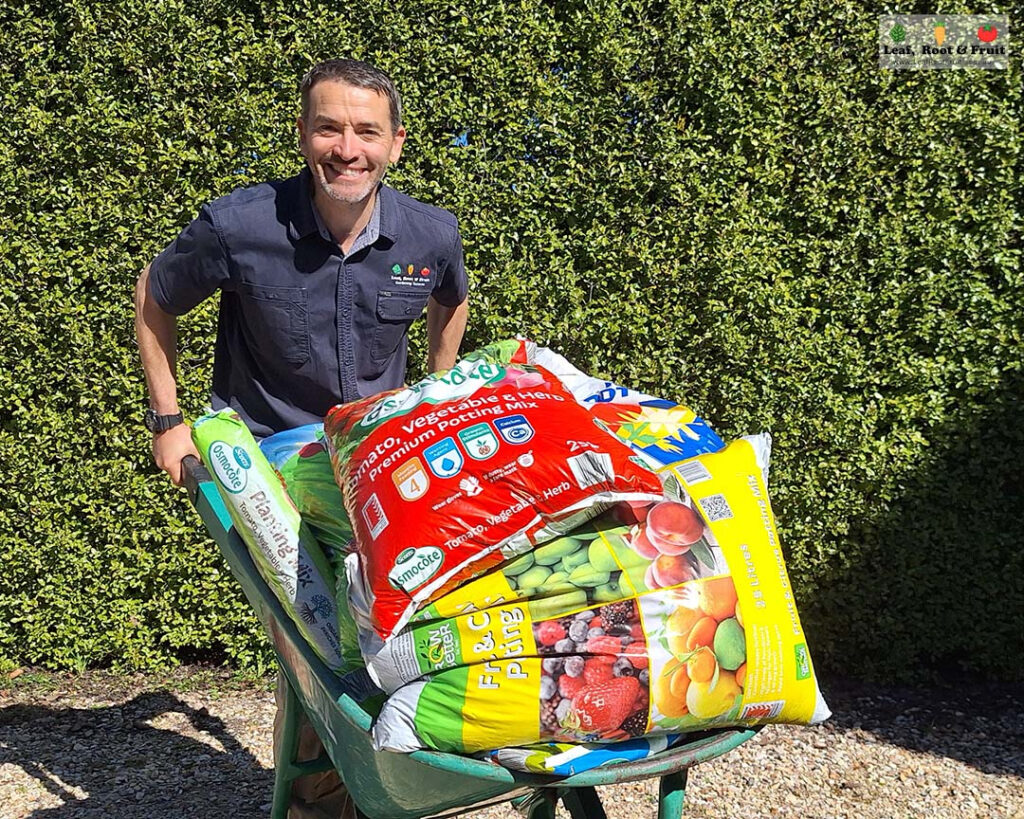
It has been 10 years since I set up my first potting mix trial. Much has changed in that time. I’ve become a dad, my business has grown and shrunk again, my family has moved from Melbourne to Kyneton, in Central Victoria, and the range of potting mixes on shelves of nurseries and hardware chains has changed. There’s now a plethora of potting mix blends specifically for growing tomatoes, vegetables and herbs. It’s time to test the manufacturers’ claims again and see which of these products are best for growing your own food.
A simple trial to put potting mix to the test
Ten years ago, I used capsicum seedlings for my trials. Lots of them. This time around, I’ve decided to reduce my costs by planting tomato seeds that I’ve saved myself. It means the results will take longer to obtain, but it also means I’ll be able to test more bags of potting mix. My method will involve using potting mix the same way I normally do: to get cold-sensitive vegetables started early in the greenhouse.
I do the experiments that help you to achieve success in the garden!
Which potting mixes am I trialling?
In the original trial, I did my potting mix shopping at Bunnings. Back then, the “big green box” sold a huge range of potting mixes. These days, the offering is much more sedate. I focused on the potting mixes marketed specifically for growing vegetables, plus a couple of premium blends. I couldn’t walk past Scotts Osmocote The Best Potting Mix – the word “Best” dominates the front of the bag. The design also features tomatoes and lemons, subliminally telling me it would be suitable for my project. Well marketed, Scotts, well marketed indeed.
I also shopped at our local Mitre 10, Rodilesa Nursery, and Reject Shop. The Reject Shop in town had a makeover recently, and when it reopened the kids were most enthusiastic to see what new options it offered for burning their pocket money. It was during this painful parenting tour of duty that I discovered it sells potting mix and decided to throw its budget option into the mix. And for consistency, I included Natures Soil (their missing apostrophe, not mine) potting mix in the trial again. It won my previous trial and I’m keen to see if it’s still the gold standard of potting mix. I’ve used it to raise seedlings for the past 10 years, but last year, my tomato seedlings suffered and were slow to fruit. I want to check whether it was just the strange growing season, or whether the quality of Natures Soil has begun to slide.
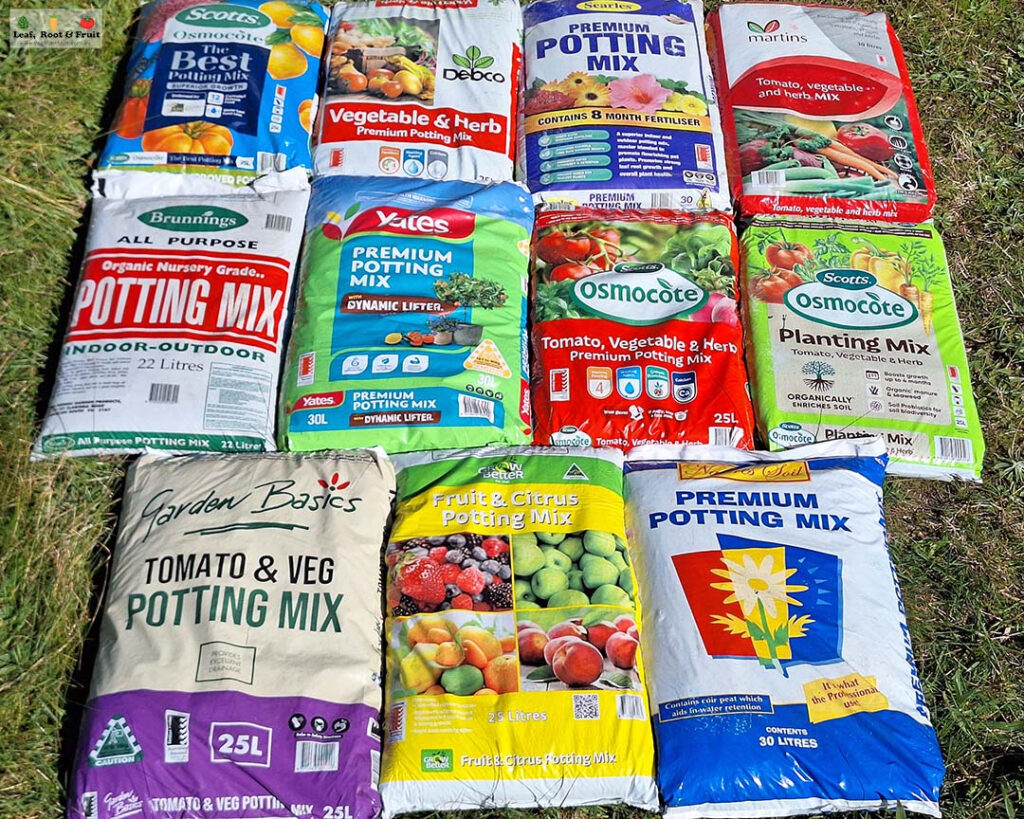
Here’s a summary of the products I purchased in August 2026, listed in order of price per litre.
| Brand | Product | Purchased from | Cost per bag | Bag size (litres) | Price per litre | Organic and/or premium certification? |
|---|---|---|---|---|---|---|
| Brunnings | All Purpose Potting Mix | The Reject Shop, Kyneton, 31 Aug | $5.00 | 22 | $0.22 | Labelled as “Organic Nursery Grade”, but in this case, the organic refers to the fact that it has organic matter in the blend. It is not certified organic. |
| Garden Basics | Tomato & Veg Potting Mix | Bunnings, Bendigo, 25 Aug | $5.97 | 25 | $0.23 | Australian Standard 3743 Regular Certified Product |
| Natures Soil | Premium Potting Mix | Direct from manufacturer in July 2026 | $8.00 (wholesale) | 30 | $0.26 | None |
| Yates | Premium Potting Mix with Dynamic Lifter | Bunnings, Bendigo, 25 Aug | $10.59 | 30 | $0.35 | Australian Standard 3743 Premium Certified Product |
| Scotts Osmocote | Tomato, Vegetable & Herb Premium Potting Mix | Bunnings, Bendigo, 25 Aug | $10.25 | 25 | $0.41 | Australian Standard 3743 Premium Certified Product |
| Scotts Osmocote | Planting Mix Tomato, Vegetable & Herb | Bunnings, Bendigo, 25 Aug | $11.24 | 25 | $0.44 | Australian Standard 3743 Premium Certified Product. On the pack it claims it “organically enriches soil”, but it is not certified organic. |
| Martins | Tomato, Vegetable and Herb Mix | Rodilesa Nursery, Kyneton, 31 Aug | $13.95 | 30 | $0.46 | Australian Standard 3743 Premium Certified Product |
| Debco | Vegetable & Herb Premium Potting Mix | Mitre 10, Kyneton, 31 Aug | $12.70 | 25 | $0.50 | Australian Standard 3743 Premium Certified Product |
| Grow Better | Fruit & Citrus Potting Mix | Rodilesa Nursery, Kyneton, 31 Aug | $12.95 | 25 | $0.51 | Australian Standard 3743 Premium Certified Product |
| Scotts Osmocote | The Best Potting Mix | Bunnings, Bendigo, 25 Aug | $14.23 | 25 | $0.56 | Australian Standard 3743 Premium Certified Product |
| Searles | Premium Potting Mix | Mitre 10, Kyneton, 31 Aug | $16.00 | 25 | $0.64 | Australian Standard 3743 Premium Certified Product |
What’s in the bags?
I was intrigued by the bag labelled as “planting mix” rather than “potting mix”. I have no idea what the difference is, and the packaging doesn’t make it clear. Possibly the planting mix is supposed to be for filling raised beds. It must be a marketing ploy because when I cracked all the bags open, they all looked like potting mix to me. There was a large variation in texture from bag to bag – some of the mixes consisted mainly of finely shredded organic matter (mostly the cheaper products). A few of these products, such as the Brunnings All Purpose from the Reject Shop and Martins Tomato, Vegetable and Herb, Mix had dried out and formed big clumps that took time to break up.
None of the bags were certified organic. Certified organic potting mixes are much harder to come by these days than they were a decade ago. In my original trial I found that the certified organic products performed poorly – any nutrients added organically, such as via compost or manure, are likely to leach quickly from pots, and this leads to pale, languishing plants. Most of the premium certified products have slow-release fertiliser added. Read my original post for more on certification of potting mixes.
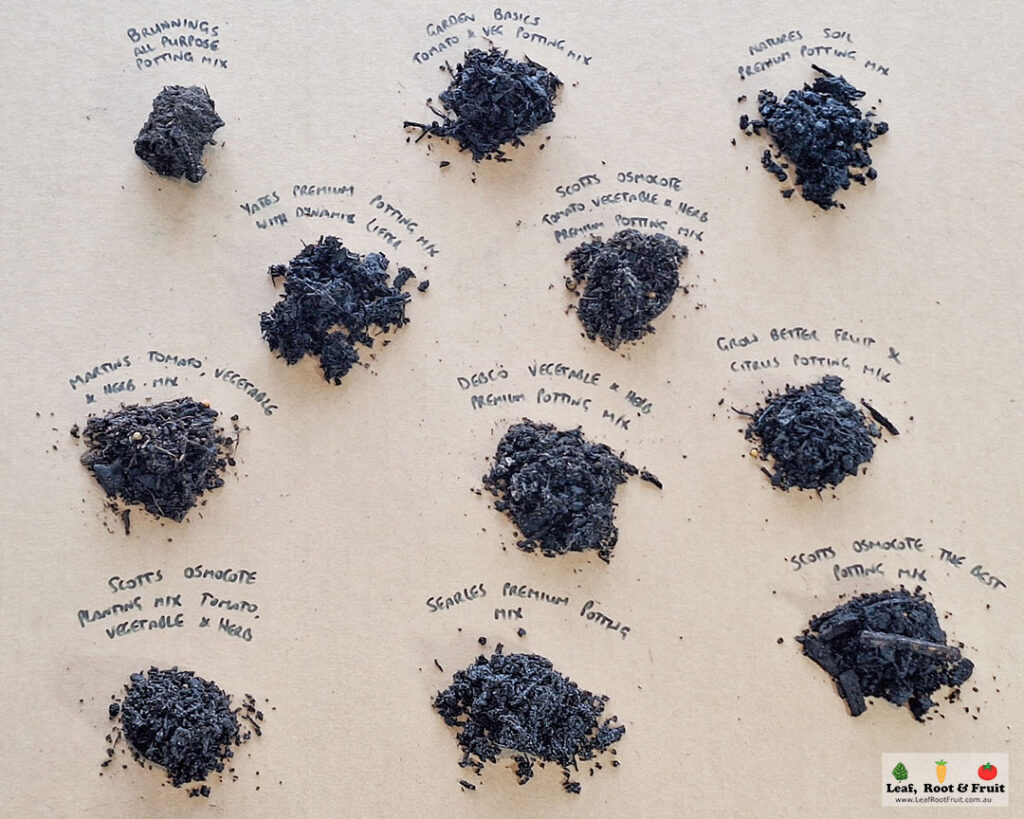
Here’s a quick summary of my observations of the texture of each potting mix.
Brunnings All Purpose Potting Mix: Extremely dry and clumped fine particles.
Garden Basics Tomato & Veg Potting Mix: This has a varied texture, but the organic material is very sharp. Some large pieces exist. This product looks very black – has it been dyed?
Natures Soil Premium Potting Mix: Coarse particles such as bark combined with finer particles and coir. Very wet.
Yates Premium Potting Mix with Dynamic Lifter: Texture similar to that of Garden Basics Tomato & Veg. Shredded sharp bits. A small quantity of white slow-release fertiliser balls.
Scotts Osmocote Tomato, Vegetable & Herb Premium Potting Mix: Very fibrous, light and fluffy. A bit dry, but not as much as the Brunnings All Purpose. This potting mix is likely to settle considerably.
Scotts Osmocote Planting Mix Tomato, Vegetable & Herb: A touch on the dry side. Very compacted and clumpy. Fine particles with lots of organic matter (green waste?).
Martins Tomato, Vegetable and Herb Mix: A moderately fine blend that is dry and starting to clump. Lots of organic matter. Yellow slow-release fertiliser balls present.
Debco Vegetable & Herb Premium Potting Mix: A good mix of fine and larger particles. Heavy in organic matter – this is likely to lead to a lot of settling. The wood chips appear very fresh. Good moisture content.
Grow Better Fruit & Citrus Potting Mix: Moist, very fine particles with no clumping. Yellow slow-release fertiliser balls evident.
Scotts Osmocote The Best Potting Mix: Very coarse with a structure similar to that of Natures Soil. Will drain freely. Most of the bark seems well decomposed but there are fresh wood chips too. Slow-release fertiliser balls visible. Based on texture alone, this mix could be great for blueberries.
Searles Premium Potting Mix: Very light and fluffy, mostly fine particles and minimal larger bark chips. Tiny white sandy particles all through it. Good moisture content. This product “feels” good to handle.
Down to business in the greenhouse
At the start of September 2026, I took each bag of potting mix and filled 10 plastic pots with it. To find a balance between giving the tomato seedlings enough space and being able to squeeze them into my greenhouse, I used 14 centimetre pots. (If you’re growing tomato plants at home, then 30 centimetres is the minimum pot size I recommend, but 40 centimetres would be better. More on pot sizes for growing vegetables here.) I sowed three “San Marzano” tomato seeds into each pot. Then I shuffled the pots and placed them in my polycarbonate greenhouse. This randomising ensures that the potting mix types will all receive similar access to sunlight and water. Once the seedlings have reached the true leaf stage, I’ll thin to the strongest seedling in each pot.


One of the advantages of this trial over the one I conducted in 2016 is that I’m not using my greenhouse for as many other things now, so I have more space in it for potting mix trials. Therefore, I can let the trial run for much longer and really push the boundaries of the potting mixes. Manufacturers of some potting mixes claim their products support plant growth for up to eight months. Let’s put that to the test!
Bonus content!
I didn’t go sifting through the entire contents of each bag, but I couldn’t help but notice rubbish mixed through some of them.
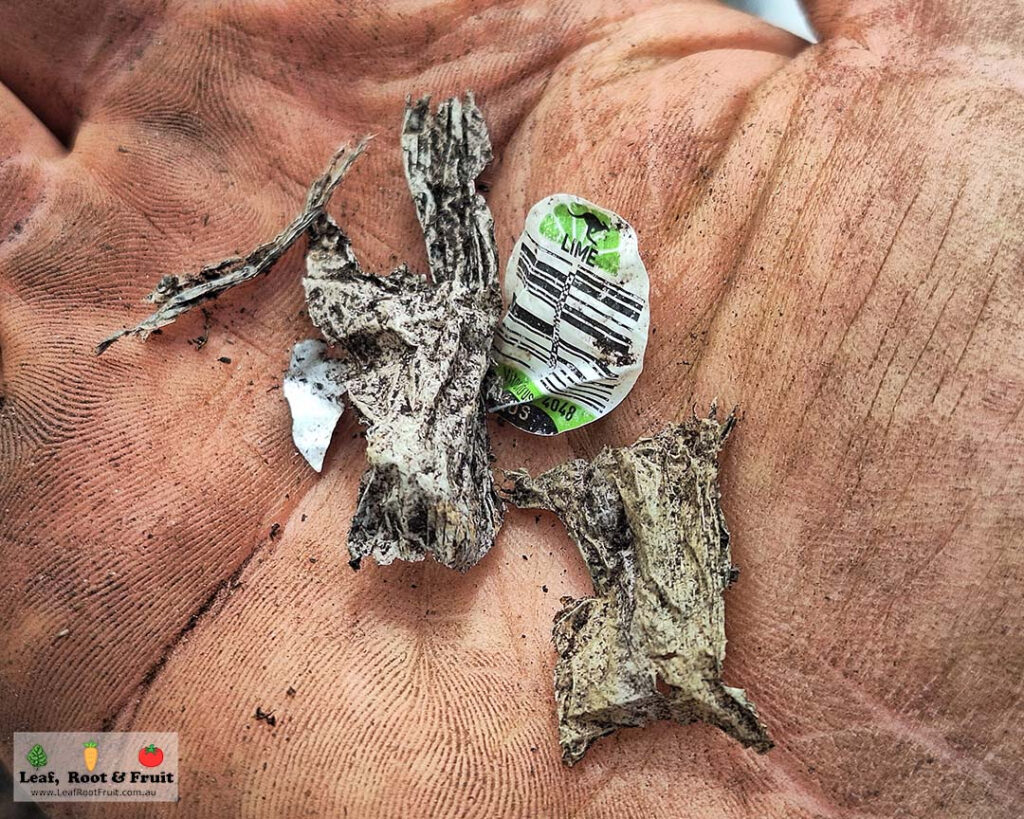
I found that the following products included rubbish:
- Brunning All Purpose: Soft plastic
- Grow Better Fruit and Citrus: Small white triangle of white soft plastic
- Debco Vegetable & Herb Premium: Soft plastic
- Scotts Osmocote Tomato, Vegetable & Herb Premium: One lime label
- Martins Tomato, Vegetable and Herb Mix: One very small piece of soft plastic
What’s next?
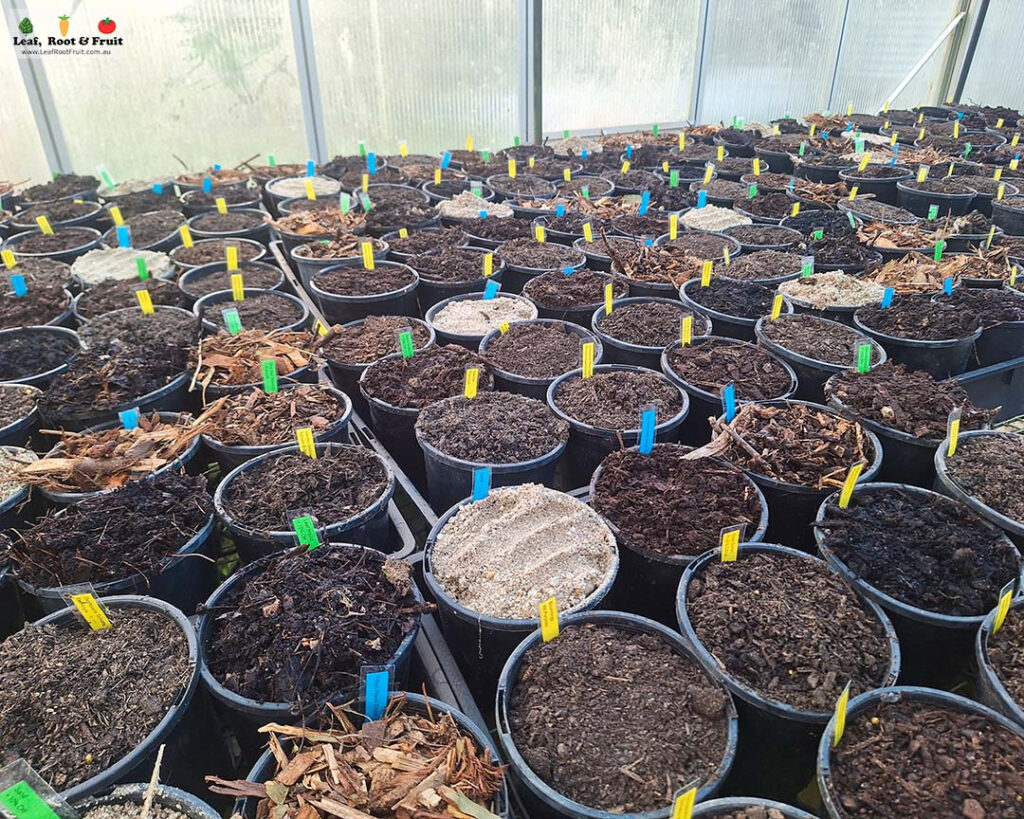
As the seedlings germinate and start to grow, I’ll be watching the plants for the following:
- Leaf colour: plants that are getting adequate nitrogen and other nutrients should appear much darker.
- Vigour: strongly growing plants indicate quality potting mix.
- Pest attack: in the past, I’ve found that potting mixes high in nitrates tend to grow plants more susceptible to leaf-chewing and sap-sucking pests.
- Flowering: is a complex process, and good soil nutrition is important to enable plants to flower and set fruit.
- Fruit development: the pots are small (so I can fit more in the greenhouse) but they should still allow the plants growing in the best potting mixes to develop and ripen some fruit.
- Germination of any weed seeds present in the potting mixes.
- Distorted leaves that could indicate herbicide contamination. Unfortunately, I’m noticing this more and more in off-the-shelf potting mix. More on this insidious problem here.
In my original trial in 2016, I transplanted capsicum seedlings into various potting mixes and then assessed the results six weeks later. This trial, in 2026, will need to run for much longer to give the seeds time to germinate and for the plants to grow.
Closing the loop with a DIY potting mix
I’m averse to gardening gimmicks and propping up the corpulent horticulture industry. I don’t buy sprays, fertilisers or other miracle products. I’m a gardener, not a cash cow (more on that here). Potting mix is one of the last gardening products I still spend money on. And it’s time that changed. Read about my trial to develop my own DIY potting mix recipe here.
Update early October 2026 - germination rates
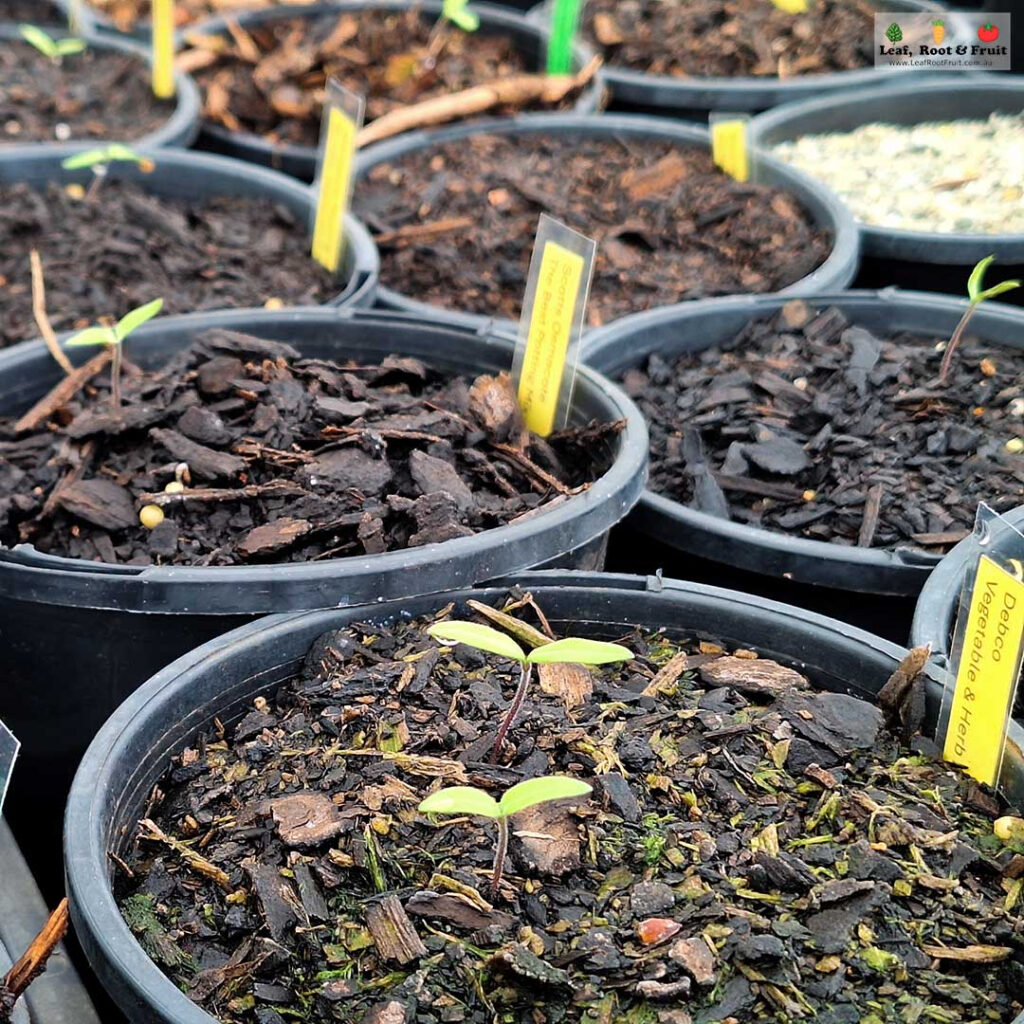
Many of the seeds have germinated by the end of September. I counted the number of seedlings present in each pot and calculated the germination rate for each product. There was some variability across the different products with the more exoesnive products generally having the better gemrination rates.
| Brand | Product | Germination rate |
|---|---|---|
| Brunnings | All Purpose Potting Mix | 7% |
| Garden Basics | Tomato & Veg Potting Mix | 63% |
| Natures Soil | Premium Potting Mix | 77% |
| Yates | Premium Potting Mix with Dynamic Lifter | 73% |
| Scotts Osmocote | Tomato, Vegetable & Herb Premium Potting Mix | 73% |
| Scotts Osmocote | Planting Mix Tomato, Vegetable & Herb | 67% |
| Martins | Tomato, Vegetable and Herb Mix | 73% |
| Debco | Vegetable & Herb Premium Potting Mix | 70% |
| Grow Better | Fruit & Citrus Potting Mix | 77% |
| Scotts Osmocote | The Best Potting Mix | 80% |
| Searles | Premium Potting Mix | 83% |
Brunnings All Purpose Potting Mix from the Reject Shop had a diabolical germination rate. I put this down to the extreme hydrophobia of the product. When I opened the bag it was bone dry and for the first fortnight, every time the pots were irrigated the potting mix repelled the water and it sat on the surface. A quick investigation showed the potting mix five millimetres below the surface was still dry – too dry for the seeds to germinate. Scotts Osmocote Planting Mix Tomato, Vegetable & Herb was also hydrophobic and that too had a germination rate below many of the others.
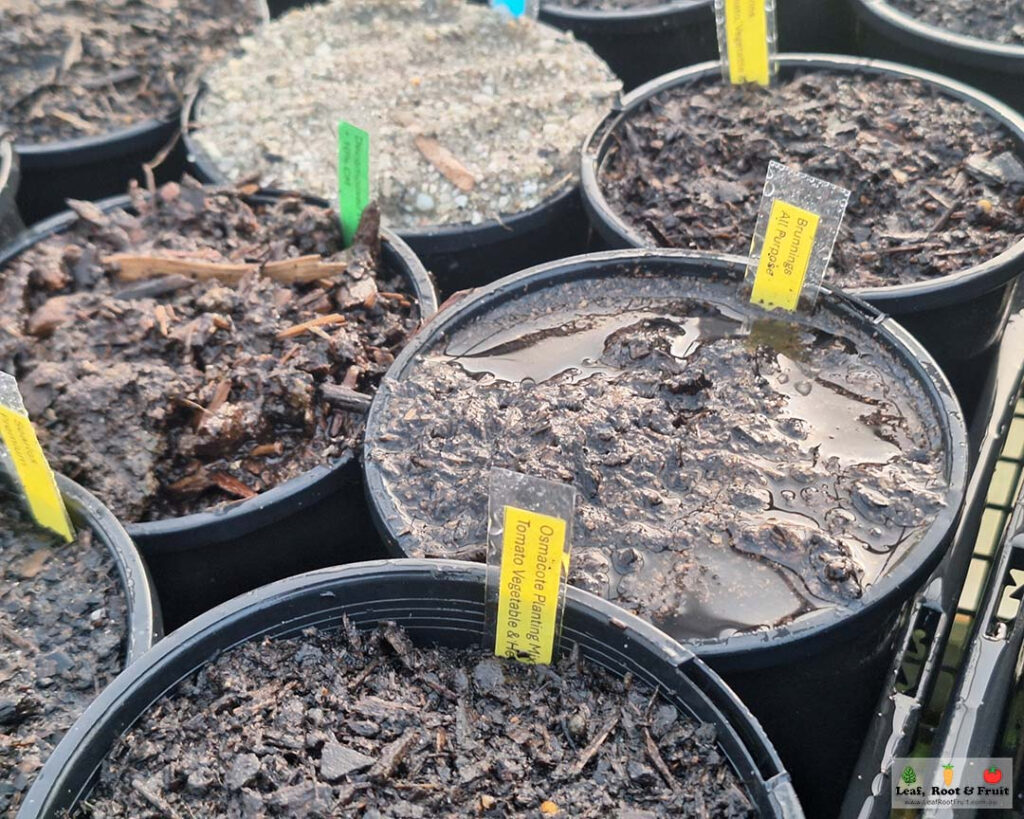
I’ve since thinned all pots to one seedling per pot. Already there is a big variation apparent in the vigour of plants growing in the different products.
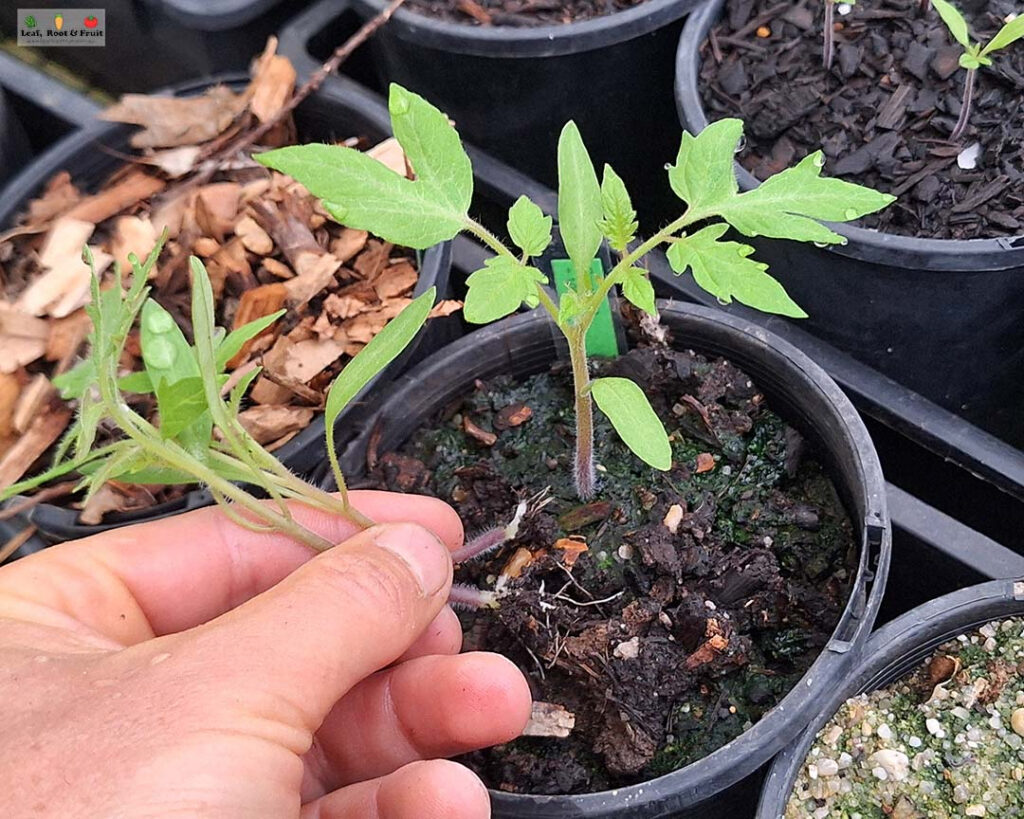
I’ll keep you updated as both trials develop. Sign up to my newsletter to make sure you don’t miss a thing.
Thanks for all the work you do Duncan. Very much appreciated.
Thanks for your support Antony. Happy gardening!